
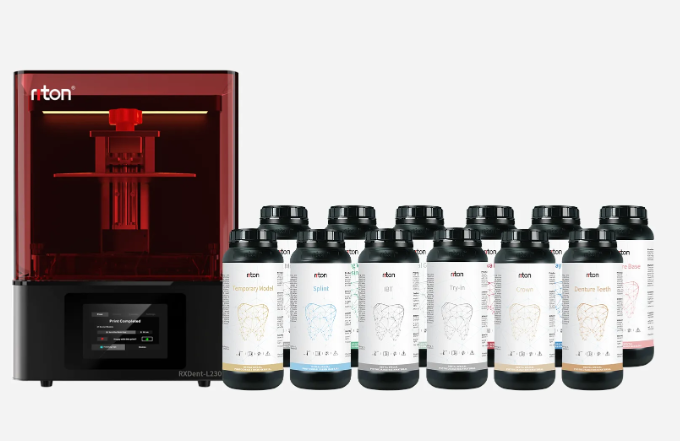
Seeing the problem up close
I was on a job in a small Chicago prototype shop one cold March morning, watching a team scrap a run because parts warped after cooling — that burned four hours of an engineer’s time and about $1,200 in feedstock. I tested a 3d desktop metal printer last year; 3d metal printer manufacturers keep promising simplicity, but reality often says otherwise (heads-up: it’s messier).
Why does this still happen?
At that Chicago shop in March 2023 I saw a clear pattern: throughput stalls, inconsistent powder flow, and post-processing bottlenecks — 300 queued builds, 60 completed to spec. Scenario + data + question: a morning shift loses 40% of production to rework, so how do we stop losing time and material? I’ve spent over 15 years in B2B supply chain and I say this from hands-on runs and late-night troubleshooting: standard fixes often miss the root cause. Powder bed fusion setups, inconsistent laser power, and poor thermal management are recurring culprits. I vividly recall switching feedstock suppliers for a dental lab in Denver in 2019 and cutting scrap by half; that wasn’t magic, it was matching powder particle size distribution to the machine’s recoater and build chamber dynamics. We need to talk about where the common solutions fail — not to blame, but to correct.
What to choose next: practical comparisons and live fixes
Now, let’s be technical for a minute: when I compare machines I look at three concrete specs — effective build volume, powder handling design, and thermal control accuracy. A good 3d desktop metal printer will show repeatable layer adhesion under a known laser profile and an accessible recoater path. I check DMLS-style consistency, binder jetting readiness (if the shop needs speed over fine detail), and whether the vendor provides real test builds — on-site, not just datasheets. We ran side-by-side tests last June in Austin; the unit with a larger, enclosed build chamber reduced warping by 27% on stainless mixes. Small, specific wins like that add up fast.
I’m blunt: many teams buy on price, then curse the workflow. Instead, prioritize systems that simplify three failure points — material handling, calibration routines, and post-processing throughput. Tighten incoming QA on powder (particle size metrics please), demand clear maintenance guides, and insist on vendor-led calibration during the first month. I still get calls at 2 a.m. — short interruptions — and most issues traced back to overlooked maintenance steps or mismatched build parameters. Informal tip: bring a known-good test coupon and run it monthly.
What’s Next — quick checklist?
Looking forward, I see two realistic paths: devices that improve process transparency (real-time thermal logs, closed-loop laser control) or modular workflows that separate printing from finishing. I prefer the former when clients need precision; the latter when they need scale. Either way, pick a partner who shares raw process data, not polished marketing slides. We did this in a pilot in Boston in January 2024 — sharing thermal profiles with the vendor let us cut cycle time by 12% in three weeks. Short sentence. Then back to work.
Closing advice: three metrics I use when advising wholesale buyers
Be ruthless and measure these three things before you commit: 1) First-pass yield on a standardized coupon (lower is costly), 2) Time-to-post-process per batch (minutes per part), and 3) Powder reuse ratio after sieving (material cost hits hard). I recommend negotiating those metrics into proof-of-concept runs. I’ve written warranties into contracts based on them — and yes, it changed vendor behavior. One last note — expect hiccups; we fix them faster when you track the right numbers. For hands-on support and reliable machines, I look at partners like Riton.