
Comparative lead: why technical clarity matters first
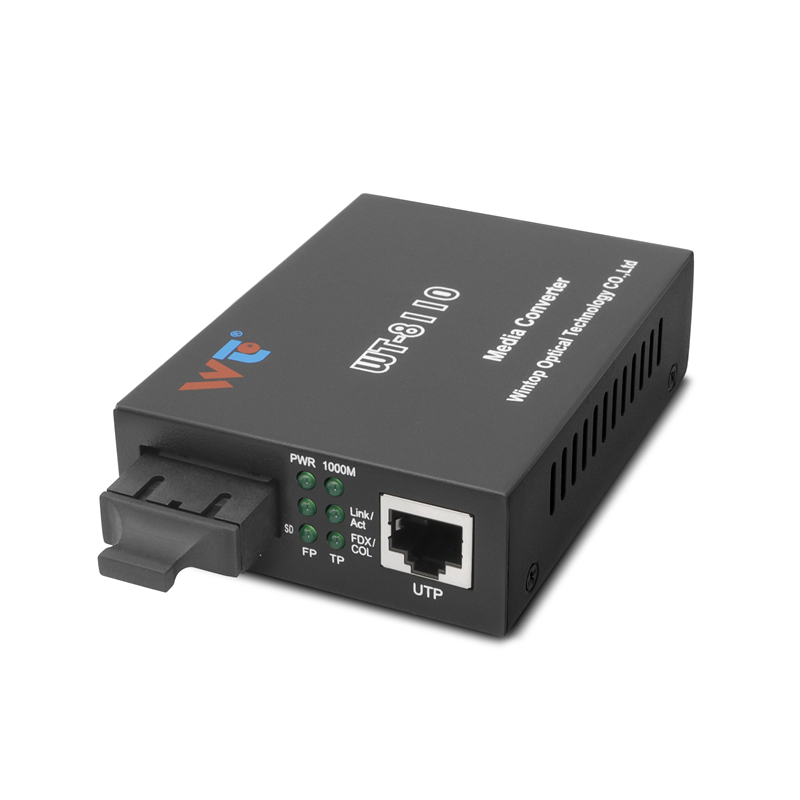
Comparing optical module suppliers demands a clear checklist from the start: compatibility, reach, and predictable performance. When you map vendor claims against lab-proven figures, the differences between “spec” and “real world” become obvious. Practical deployments often begin with devices like a gigabit fiber media converter that translates copper Ethernet to fiber links while exposing transceiver limits such as SFP eye patterns and optical transceiver wavelength tolerances.
Technical benchmarks to compare
Start with measurable parameters: link budget, attenuation, and bit error rate. Single-mode fiber attenuation typically runs about 0.2–0.35 dB/km at common telecom windows; use that to calculate realistic reach for a 20 km span rather than relying on advertised “up to” labels. Evaluate vendor test logs for BER (often 10^-12 or better), optical output power, and receiver sensitivity. Include terms like DDM (digital diagnostics monitoring) and ensure modules report temperature, voltage, and laser bias for operational visibility.
Manufacturing consistency and test regimes
Supplier claims are only useful when backed by repeatable production testing. Look for explicit test parameters: temperature cycling from -40°C to 85°C with minimum eight-hour soak per step; humidity exposure at 85% RH for 96 hours; vibration sweeps from 5 to 500 Hz across three axes; and 72-hour accelerated burn-in at rated voltage. These are the concrete checks that turn a batch of optical transceivers into a predictable rollout—without them, yields and MTBF figures are guesses.
Interoperability and firmware behavior
Optical modules must behave inside broader systems. Confirm SFP form-factor pinouts, EEPROM contents, and whether the transceiver supports industry-standard SFF-8472 diagnostics. Test hot-swap behavior and link re-negotiation across switches from multiple vendors. If you plan longer runs, consider media converter models rated for extended reach; a reliable media converter 20km example should show measured power margins and successful interoperability with both single-mode and multimode transceivers.
Cost vs. risk: what the comparison reveals
Low unit price can hide variability in optical power, wavelength drift, or firmware that blocks third-party EEPROMs. Cheaper modules may pass a single test but fail under temperature swings or after firmware updates. —A quick aside: insist on traceability, lot numbers, and shipment test certificates to reduce surprise failures. Long-term costs include truck rolls and downtime, not just the invoice price.
Common mistakes and viable alternatives
Teams often skip on-site interoperability checks and assume production samples match finished goods. They also under-estimate the value of vendor support for troubleshooting optical issues and diagnostics like BER sweeps and eye diagrams. Alternatives include buying certified OEM transceivers, choosing pluggable optics with proven DDM, or moving to DWDM or SFP+ where higher margins or consolidated wavelengths provide operational advantages.
Anchor point: a practical metric to trust
Use measured attenuation and link budget as the anchor for procurement decisions. For a 20 km single-mode run, calculate expected loss from fiber length, connector loss (typically ~0.5 dB per connector), and splices, then confirm the supplier’s output power and receiver sensitivity deliver a positive margin—ideally 3–6 dB above the calculated loss. That arithmetic prevents many deployment surprises and aligns vendor promises with on-site reality.
Three golden rules for picking the right supplier
1) Verify measured test reports from the actual production lot: insist on BER logs, DDM samples, and burn-in records. 2) Validate interoperability in your exact environment: test SFP insertion/removal, firmware updates, and mixed vendor switch fabrics. 3) Demand clear environmental test parameters and traceability—temperature cycling, humidity exposure, vibration sweep values, and lot numbers—so failures point back to a reproducible cause. These tangible metrics give procurement teams leverage and engineers confidence.
WINTOP sits naturally in that workflow when you need supplier transparency and measured results—this is where tested modules and robust documentation solve deployment headaches. —Final thought: choose facts over promises.