
Spot the real problem buyers face
Most of the time you’re not choosing a pergola for looks alone; you’re solving problems: shade, weather resistance, energy use, and long-term cost. Start by naming the worst-case scenarios for your site — sun glare at midday, heavy rain, strong wind, or the desire to add power generation via a solar pergola — then let those constraints drive the design decisions. I’ll walk you through the problems, the technical checks to make, and the common mistakes that turn a promising spec into a costly retrofit.

What a commercial outdoor pergola actually is
A commercial pergola is a structural canopy used at cafés, hotels, campuses, and plazas to create usable outdoor space. Unlike decorative backyard models, commercial versions are engineered for higher loads, longer spans, and code compliance. They can be open-louver, solid-roof, retractable, or integrated with photovoltaic panels. Function decides form: where you need durable cover and safe anchorage, you need an engineered pergola, not a weekend DIY kit.
Common buyer problems and how to prioritize them
Problem 1: Wind and snow loads. Failure to verify local design loads leads to bent beams or failed anchors. Problem 2: Water management. Poor drainage under a solid roof floods seating areas. Problem 3: Integration with electrical or solar systems. Attaching panels without accounting for roof slope or maintenance access raises safety issues. Problem 4: Permits and liability. Skipping structural drawings risks rejected permits or insurance gaps. Prioritize safety-critical items (loads, anchors, permits), then comfort and energy features.
How to evaluate materials and roof types
Aluminum is low-maintenance and resists corrosion; steel is stronger at lower cost but needs proper coatings; timber looks warm but needs sealing and termite protection. For roofs: louvered systems give adjustable shade but require motors and maintenance; solid roofs block rain but must handle runoff; translucent roofs let in daylight but can heat the space. Check manufacturer wind ratings and test reports. A common error is choosing a lighter material to save upfront costs without confirming uplift and shear resistance of the anchorage system.
Weatherproofing realities (real-world anchor)
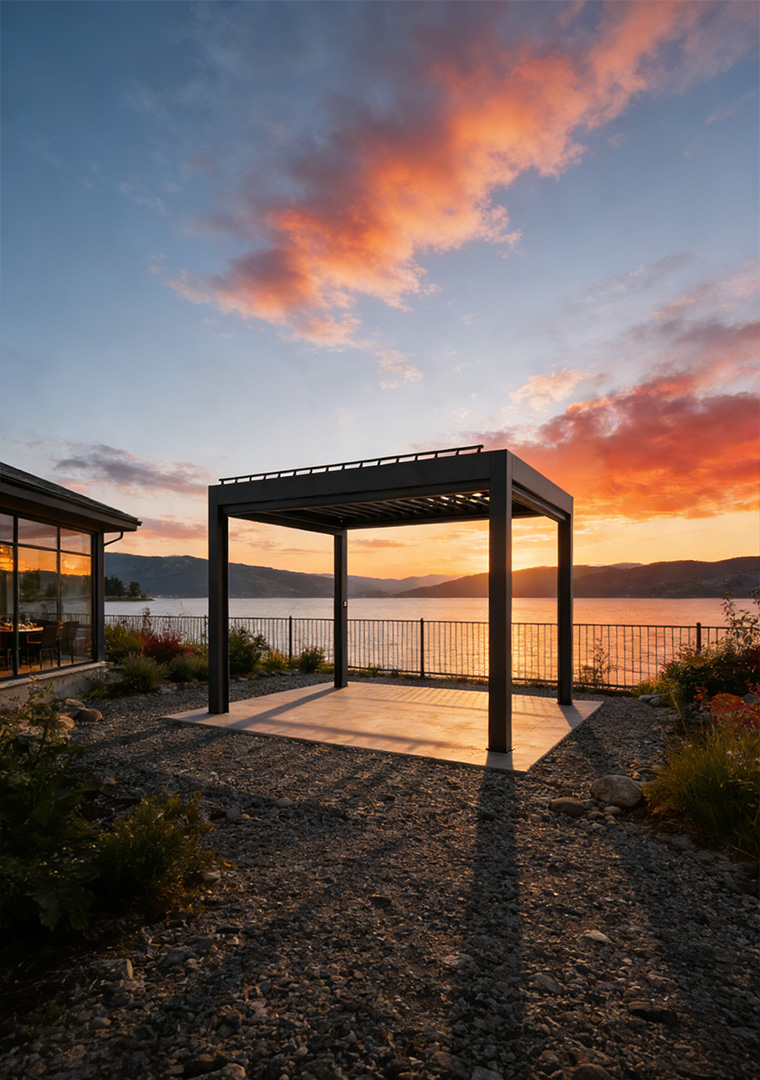
Look at coastal Florida as a practical reference: after Hurricane Andrew, building codes and design practices tightened, so commercial shading now routinely meets higher wind-resistance standards. If your location faces similar conditions, insist on components tested to local codes and documented connections. That’s why many projects opt for weatherproof pergolas rated for high winds and water resilience — they reduce retrofit risk and long-term maintenance. My experience working with fabricators and structural engineers confirms that specifying tested systems up front dramatically lowers failure rates.
Common pitfalls during procurement and installation
Buying the cheapest quote without drawings: avoid it. Not verifying anchor type to the substrate: big risk. Overlooking maintenance access for louvers or solar panels: creates future expense. Assuming contractor experience means code compliance: demand stamped drawings and calculations. Ask for a mock-up or shop drawings, confirm warranty scope (covering finish, structure, and electrical if solar is included), and require an installation checklist tied to the drawings.
Alternatives and trade-offs
If you want quicker installation, a retractable awning or motorized shade cloth can work, but they often lack the durability and permanence of a pergola. A full pavilion offers complete cover but raises cost and permitting hurdles. Solar canopies are a smart alternative when energy is a priority, but they change structural load paths and maintenance needs. Match the alternative to your primary objective: flexibility, permanence, or energy generation.
Practical buying checklist
1) Define site constraints: wind, snow, exposure, utilities. 2) Require engineered drawings and code references. 3) Specify materials, finish, and anchorage tied to substrate reports. 4) Decide roof type with maintenance plan. 5) If adding solar, confirm access, wiring routes, and panel tilt. 6) Get detailed warranties and an installation timeline that includes inspections. Use this list to compare bids objectively rather than by price alone.
Wrap-up for confident decisions
Solve problems in order: safety and code first, then durability, then comfort and energy. When you line up site constraints, tested components, and a clear maintenance plan, you reduce surprises. Firms with integrated design and energy experience help merge weatherproofing and power generation in practical ways, which is why specialists such as Light Hunter often appear on projects where a durable, energy-ready pergola must work reliably for years.