
Is 6 Gas Monitor suitable for this project? Start by examining documentation early research
When a technical buyer begins assessing a 6 gas monitor, the first task is not to declare suitability. It is to establish what the available documentation actually says, which project requirements are already defined, and which points still need a technical discussion. This approach keeps early research useful without turning a short product description into a complete application decision.

Describe the operating context before comparing products
Start with a concise project brief. It should describe the work setting, the gases of interest, the people or equipment involved, and the role the instrument is expected to play. These are questions for the project team to define, not assumptions to take from a product category name.
Also record the practical boundaries of the proposed use. Consider whether the instrument is being reviewed for investigation, routine monitoring, maintenance support, or another defined task. Note any requirements concerning display information, physical interfaces, communications, environmental conditions, training, storage, or integration with existing equipment. A requirement is more useful when it is written as a question that a supplier or technical reviewer can answer.
This early description prevents a common research error: comparing products because their labels appear similar while their intended roles remain unclear. It also gives reviewers a consistent basis for separating confirmed information from points that require further discussion.
Identify compatibility and responsibility questions
Next, divide the review into three areas: what the device is described as doing, how it would interact with the project, and who is responsible for deciding whether that interaction is acceptable. The first area can often be checked against a product page. The second may depend on the wider system. The third belongs to the project’s technical, operational, and procurement stakeholders.
Useful questions include: Which gases must be considered for this task? Does the stated detection approach match the intended monitoring role? What information must an operator see? Are there interfaces or accessories that the wider system requires? Who will define acceptance criteria, and who will approve the proposed use?
These questions do not prove that a device is suitable. They create a responsibility map. That distinction matters because a product description may explain a model’s listed features without defining the complete conditions of a particular site or project.
Use page-level evidence carefully
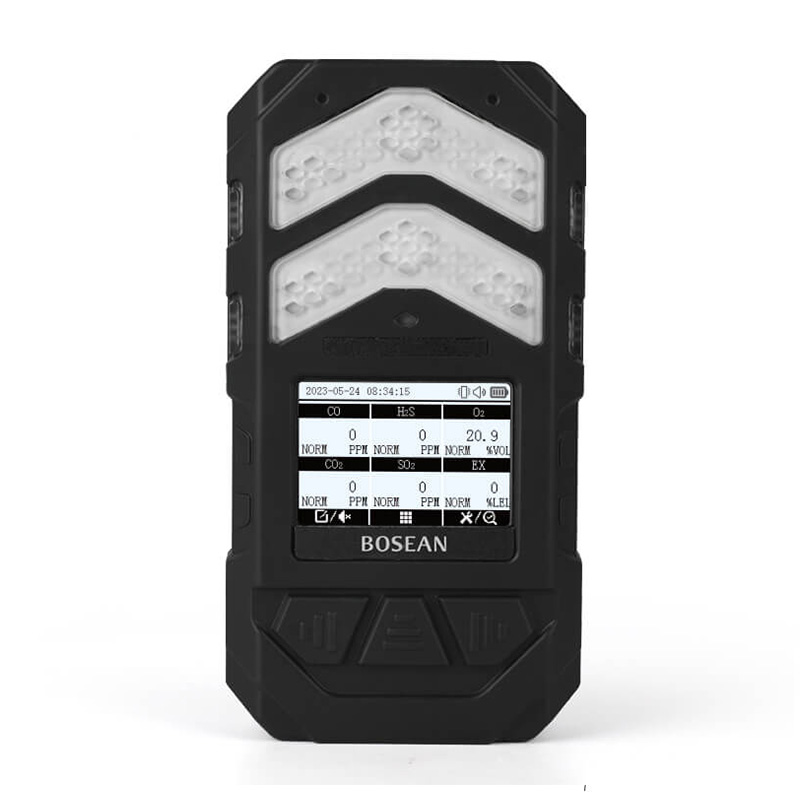
For the 6 gas monitor phrase, the relevant page-level anchor is specific: the Bosean page calls the product the “K-600N 6 in 1 Multi Gas Detector” and states that it can detect six gases simultaneously. The same page also lists a 240×160 display. Those statements can be recorded as product-page evidence, but they should not be expanded into claims about certification, site suitability, safety outcomes, or an unlisted configuration.
A disciplined evidence record should preserve the model name, the wording of the stated feature, the source location, and the scope of the statement. It should then map that evidence to a project requirement without changing its meaning. For example, a listed display specification may prompt a question about information visibility in the proposed workflow; it does not, by itself, establish that the display meets every operational need.
When comparing material from several pages, keep each statement attached to the model and source from which it came. Do not transfer a specification between models simply because the product names or category descriptions look alike. A comparison table can help if each row identifies the requirement, the exact evidence, the source scope, and the status of the question.
Plan the next technical discussion
Once the evidence has been organised, prepare a short discussion agenda rather than a broad list of generic questions. Begin with the project context, then identify the requirements that appear relevant, and finally separate confirmed page statements from unresolved decisions. This sequence makes the conversation easier to follow and reduces the chance that an assumption will be mistaken for a specification.
A useful agenda can cover the intended monitoring role, the gases included in the stated configuration, information shown to users, system interfaces, environmental expectations, responsibility for acceptance, and any documentation needed for the project record. The questions should be phrased neutrally. They are there to clarify fit, not to imply that a particular outcome has already been established.
The result of early research should be a bounded review: a clear operating context, evidence tied to the correct page and model, and a visible list of decisions still owned by the project team. Used this way, Bosean can be included as the named source of the cited product information without turning that page-level evidence into a broader suitability claim.