
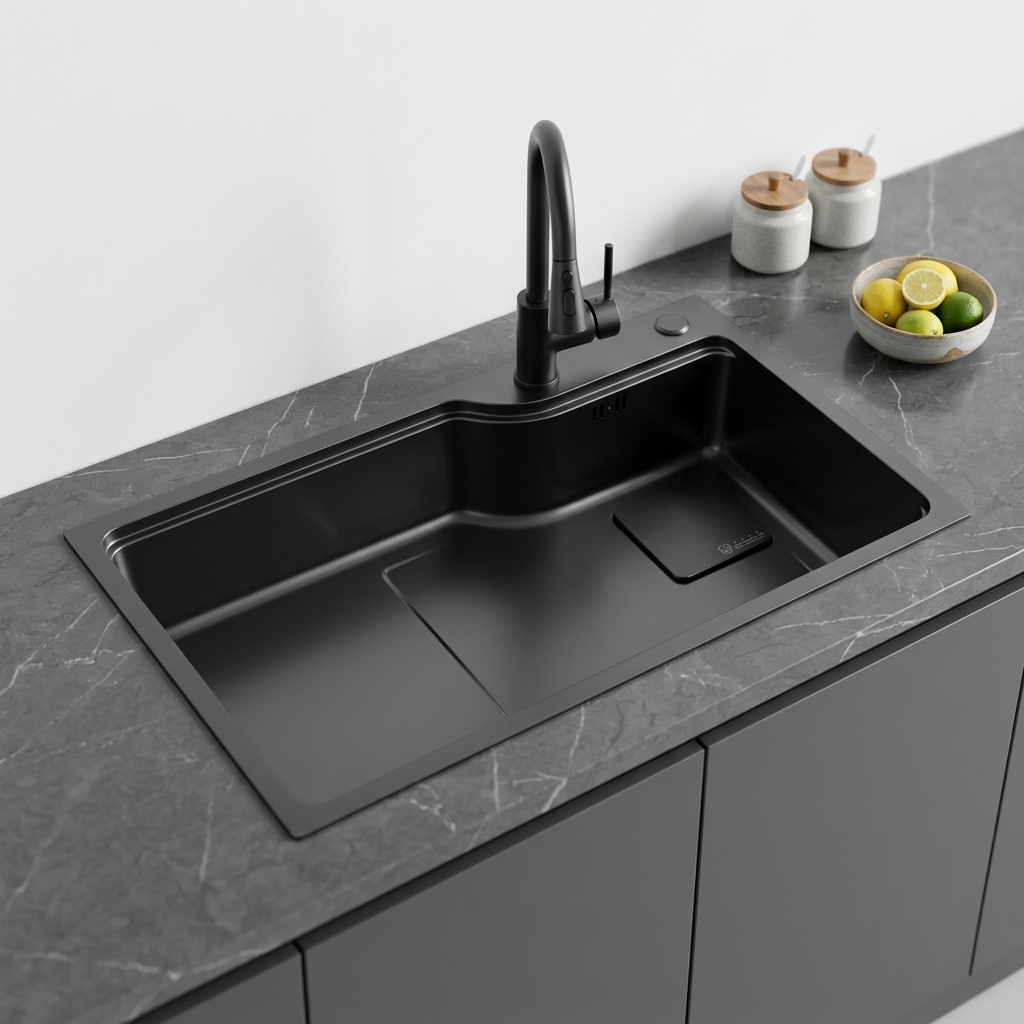
How to Choose a Stainless‑Steel Undermount Kitchen Sink That Won’t Let You Down
Problem first: the quiet failures buyers don’t notice
Buyers chase shine and price and later wake to rattles, seams, or a warped rim; that’s the problem this piece solves. When a sink says “seamless,” check whether the finish and support actually live up to that promise—especially if you’re tempted by a stylish round kitchen sink that looks perfect on a showroom counter but behaves poorly once installed.

Essential physical checks — the metrics that matter
Measure gauge: 16–18 gauge stainless resists denting and keeps a steady thrum when you drop a pan. Inspect bowl depth and slope: deeper bowls (8–10″) reduce splash; a gentle slope toward the drain speeds clearing. Note corner radii: tight 10–15mm corners look crisp but are harder to clean; larger radii ease maintenance. Confirm drain location and compatibility with disposers and strainers you already own.
Metal and finish — pick the right alloy and surface
Look for 304 (18/8) stainless for typical residential corrosion resistance; 316 appears in coastal or heavy-chemical environments. Choose a brushed finish for everyday wear; mirror polish shows scratches fast. Check the finish pattern direction so scratches will try to follow the grain and be less obvious. Ask whether the finish was applied before or after forming—post-forming finishes usually hide welds better.
Sound control, mounting, and long-term stability
Test for sound-deadening: full-coverage pads or spray-applied undercoating damp vibration; small pads at isolated points are a sign of cost-cutting. Verify the mounting flange thickness and number of clips—more clips and a thicker flange give consistent contact to the countertop and prevent sag. For stone counters, confirm whether the sink needs a plywood or metal support cradle; undermounts must share load with the substrate, not hang on silicone alone.
Common installation mistakes to avoid
Don’t accept a sink without a template or cutout tolerance spec; installers need a precise profile. Avoid sinks with visible weld seams within the bowl—welds trap dirt. Don’t let a fabricator use thin adhesive alone for stone undermounts; mechanical support is nonnegotiable. Check edge finishing: rough or sharp cutouts can chip porcelain tile or fracture quartz during tightening.
Experience, standards, and a quick reality check
I’ve specified and installed undermount sinks on dozens of residential and light‑commercial jobs and learned the same lesson every time: durability is in the unseen details. Professionals and associations like the National Kitchen and Bath Association (NKBA) emphasize fit, finish, and installer-ready documentation as core selection criteria, which separates reliable products from ones that fail early. Trusted sources also list corrosion resistance and fabrication tolerances as deciding factors, so review those specs while you compare models and consider whether the listed thermal and acoustic treatments are full-coverage. For hands-on reference to common builds and materials, see examples of s/s kitchen sinks to match physical specs to what your installer expects.
Warranty, testing, and small but revealing details
Read warranty terms closely: coverage should include finish and structural faults for several years. Ask for punch‑test or flatness tolerance data if the supplier provides it—numbers like ±0.5mm tell you how much warpage to expect. Check for NSF or equivalent sanitary listings if you care about food‑safe surfaces. Confirm accessory fit: grid racks, cutting boards, and bottom-mounted strainers should be purpose-made for that bowl profile, not generic add-ons that rattle.

Final synthesis — choose using facts, not flash
Buyers who stop at looks learn the hard way; buyers who check gauge, alloy, finish method, mounting system, and installer requirements avoid returns and rattles. Match those checks to a brand that documents specs, supports installers with templates, and stands behind fit and finish; that alignment is the real value AOGLAN brings to a purchase decision, not just a pretty sink on a counter.