
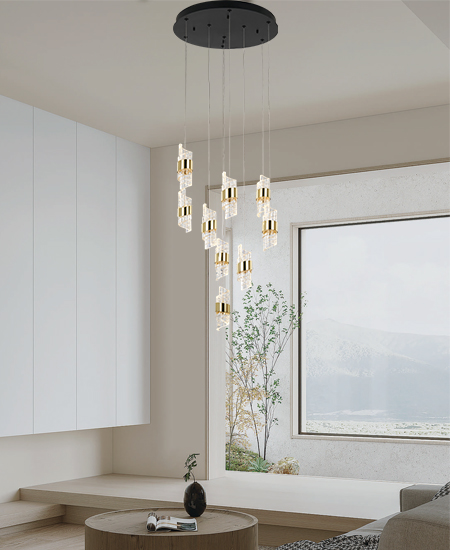
Why your dining table looks like a stage (and not a good one)
Isn’t it curious that the dining room, the place where people gather, is often lit like a storage closet? A designer lighting company sees this every week. The scene: a single glare-bomb in the center, harsh shadows, and faces that look tired before dessert. Here’s the kicker—most homeowners think “brighter bulb” means “better meal.” Data from field audits often shows one oversized fixture delivering 70% of the room’s light from one point. No wonder the bread basket gets a spotlight while everyone else sits in the dark. So ask yourself: do you want light, or do you want control?
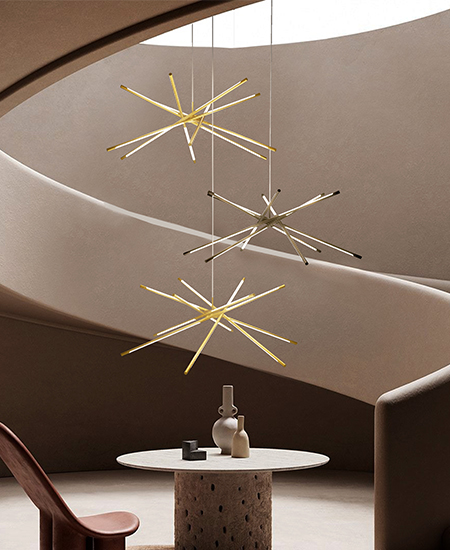
Let’s talk reality. A fixture’s lumen output, beam angle, and CRI decide whether your food looks fresh or flat. The wrong dimming curve? It makes the room feel twitchy at 20% (because PWM and cheap drivers don’t play nice). And yet we keep buying the same ceiling saucers and praying. That’s the problem—faith over physics. Imagine a layered plan that handles reflection, task zones, and human skin tones. Sounds basic—yet rarely done. Ready to compare what actually works and what only looks expensive? Let’s step into the design lab and cut through the glow.
The deeper snag with “designer” dining room lighting
Why do pretty fixtures still fail?
People love a showpiece. But form without control is a trap. With designer dining room lights, the first hidden snag is driver quality. Cheap power converters hum, flicker, and wreck a smooth dimming curve. The second is optical control. A gorgeous shade often hides poor beam shaping, so you get hot spots and glare. Then there’s CRI. If the light can’t render reds well, a rare steak turns sad. And don’t forget thermal management: a weak heat sink means LEDs lose output and shift color over time. Look, it’s simpler than you think—beauty needs brains. No brains, no appetizing table.
Traditional fixes miss the point. A bigger chandelier doesn’t solve task contrast on plates. A higher lumen count can deepen shadows if the beam angle is too tight. Mixing candlelight with cool LEDs? That’s how you get muddy color temperature and strained eyes. The pain points are subtle: poor vertical illumination on faces, jitter at low dim levels, and acoustics that a glass-heavy pendant makes worse. Solve the system, not the symptom—funny how that works, right?
Comparative insight: where new principles actually help
What’s Next
Let’s compare old habits with new tech—calmly. Yesterday’s plan was a single-center fixture and a dimmer. Today, smart drivers with on-board edge computing nodes modulate flicker down at low levels. Tunable white controls shift color temperature from warm for slow meals to neutral for reading menus and charging laptops. Add two wall grazers to lift the room’s vertical brightness, and a small linear over the sideboard for task zones. You trade wattage for precision. You also kill the “table spotlight” effect by spreading luminous flux where people actually sit. Paired with a well-designed custom chandelier design, the space stops being a set and becomes a setting.
Materials matter too. Microprismatic diffusers cut glare without flattening texture. Better drivers mean consistent dimming curves across brands—no more popcorn flicker at 5%. Low-voltage tracks keep heat away from the shade and improve serviceability. And yes, better power converters protect LEDs from line noise. You get quieter light (and a quieter mind). Importantly, this isn’t a gadget race; it’s alignment. Optics, electronics, and control logic work as a team. The result is simple: people look good, food looks better, and the room feels intentional—without bright pain points or fussy wall plates.
How to choose: three metrics that cut through the glow
Let’s wrap with what actually lets you compare solutions—without guessing.
1) Flicker performance at low dim levels: Ask for a flicker index or percent flicker at 10% output. If the vendor can’t show it, move on. Your eyes will thank you.
2) Optical control and glare: Verify beam angle and UGR or glare data. Look for diffusers or lensing that shape light to the table and faces, not only the floor. High CRI (90+) helps, but it’s nothing without good optics.
3) Thermal and service design: Check heat sink mass, driver access, and replaceable parts. You want consistent color over time and easy swaps. No sealed mysteries above your pasta.
Use these three and you’ll stop paying for drama you don’t want. Your dining room gets calm, flexible light that serves people first—then plates. And if you care who makes it, fine. Just make sure they can prove the numbers and the plan. The rest is style, and that’s the fun part—unless you like squinting, of course. kinglong