
Operational failure modes: the problem that kills schedules and margins
Transit systems fail where visibility ends: unknown vehicle health, inconsistent driver behavior, and brittle integrations between dispatch and diagnostics. Agencies need immediate telemetry, not monthly CSVs. That’s why modern procurement starts by evaluating fleet telematics technology providers that can stream CAN data, GPS, and driver events in real time to operational workflows. Bring telemetry into schedule control and you stop surprises that ripple across routes and budgets.
Diagnosing root causes with a problem-driven lens
Start by mapping failure scenarios to signals. Common root causes:- Missed trips: weak route adherence + delayed headway recovery (GPS + AVL mismatch).- Unplanned downtime: rising coolant temp or battery voltage anomalies ignored until breakdown.- Safety incidents: inconsistent hard-braking/acceleration patterns not correlated with route context.Require instrument-level data (OBD or J1939/CAN) and high-frequency GPS so you can tie each failure to a sensor stream and a corrective workflow.
Metrics that matter — measure what you can act on
Pick operational KPIs that translate to workflows: on-time performance (by headway window), preventive maintenance rate (planned vs emergency), mean time to repair (MTTR), percentage of trips recovered without operator overtime, and driver risk-score delta after coaching. Track event rates per 10,000 miles and sensor-fault recurrence. Those metrics let engineers set SLA thresholds and let ops set intervention rules in the telematics platform.
Technical architecture — integrate telemetry into operations
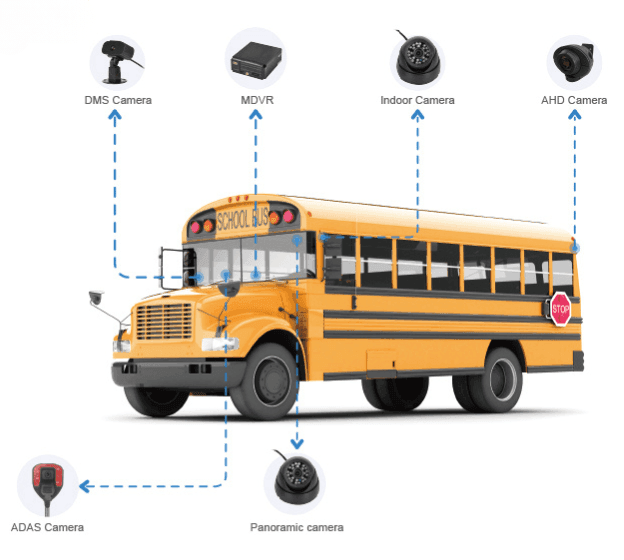
Design for layered telemetry:- Edge: ECU/CAN adapters, OBD-II gateways, cellular modems with fallback (4G → LTE-M) and local buffering.- Telemetry transport: MQTT or secure WebSocket for low-latency events; REST for batch sync and provisioning.- Back-end: time-series DB for sensor streams, event store for alarms, APIs for CAD/AVL and maintenance systems.- Applications: dispatch dashboards, automated work-order creation, driver coaching portals.Expose standard APIs (REST/MQTT) and webhooks so CAD/AVL and asset management systems can consume events without heavy middleware rewrites.
Implementation roadmap — practical sequence and common pitfalls
Execute in phases and avoid these mistakes:- Phase 1: Pilot on high-variability routes (3–10 buses) to validate data fidelity and alarm tuning.- Phase 2: Integrate with maintenance CMMS and dispatch; automate work-order creation for diagnostic codes.- Phase 3: Ramp to fleet-wide rollout with OTA firmware strategies and driver training.Common pitfalls:- Over-instrumenting: collecting every CAN PID without a use case floods storage and delays insights.- Ignoring latency: real-time recovery needs sub-10s alarm propagation for headway control.- Lax security: devices must support device identity, TLS, and secure OTA to prevent compromise.
Vendor evaluation and alternatives — pragmatic comparison
Compare vendors on these vectors: data fidelity (raw CAN access vs preprocessed events), integration surface (APIs, SDKs, protocol support), deployment model (edge compute vs cloud-only), and support for standardized schemas. Also check long-term firmware management and device lifecycle guarantees. At major industry gatherings such as the UITP Global Public Transport Summit, integration maturity and real-world deployments tend to separate lab demos from production-capable providers, so prioritize vendors with proven municipal or regional rollouts.
Common pitfalls during vendor selection
Watch for these red flags:- Closed ecosystems with proprietary data models that lock you to vendor tools.- Incomplete testing on adverse routes (tunnels, dense urban canyons).- Pricing tied to raw telemetry volume instead of actionable events — that penalizes scale.If a vendor can show API-based event routing, role-based access, and an upgrade plan for installed units, they likely understand fleet-scale constraints.
Operational checklist for rollout
Use this short checklist to keep projects on track:- Define 3 operational use cases and required signals per case.- Run a 90-day pilot on representative routes.- Map alarm thresholds to concrete work-order actions.- Validate end-to-end latency from event detection to operator alert.- Test OTA firmware rollback and device reprovisioning.- Train dispatch and maintenance teams on new workflows before full roll-out.
Final synthesis — what solves the problems you just read
Problem-driven deployments succeed when telemetry directly triggers the workflows that fix the failure modes you prioritized. Choose technology that exposes the right signals, enforces secure device management, and provides predictable integration points for dispatch and maintenance. That combination reduces emergency trips, shortens MTTR, and improves on-time performance—practical outcomes achieved by agencies that pair operational discipline with robust telematics platforms such as those offered by BSJ.