
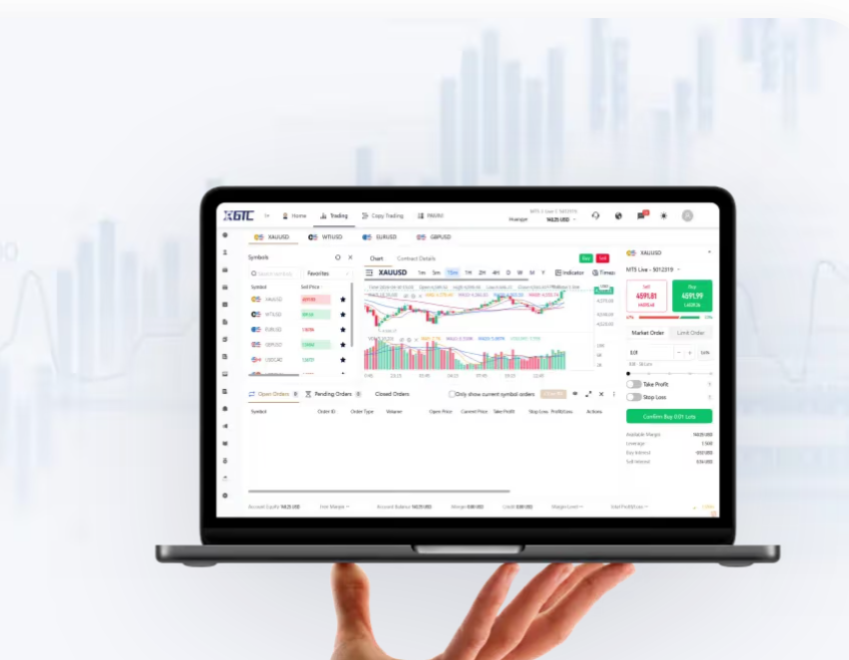
Data-first perspective on MT4 and commodity CFDs
The MT4 environment rewards precise, measurable decisions when trading commodities cfd. Traders who treat execution as an empirical process—recording entry quality, spread behaviour, and slippage—produce repeatable outcomes. The April 2020 WTI futures dislocation remains a stark reminder of how price behaviour and liquidity can diverge from models; such events must shape platform setup and risk limits.
Essential MT4 configuration for commodity markets
Setups that work for FX often require adaptation for commodity CFD venues. Prioritise charting timeframes that match your holding period and use tick- and minute-based volume filters where available. Recommended technical elements: a low-latency feed, a custom spread monitor, and an execution script that records order fill times. These items reduce hidden costs such as spread widening and slippage. Leverage and margin should be explicit in your display—never rely on default values.
Indicators and telemetry that matter
Limit indicator use to those that provide distinct signals: trend strength (ADX), volatility bands (Bollinger Bands or ATR), and a liquidity proxy such as order-flow heat. Keep indicator depth modest; excessive overlays create false confirmation. Export indicator outputs into a simple ledger to compare predicted versus realised moves—this becomes your quantitative feedback loop.
Order types, execution tactics, and market microstructure
Use limit orders when liquidity is predictable; prefer market or marketable limit orders near key economic events. Track rollover costs and overnight financing for multi-day positions—these erode returns. Slippage increases during news and low-liquidity sessions; record average slippage per instrument and adjust position sizing accordingly. A focus on spread and liquidity will lower transaction cost if you maintain discipline on execution windows.
Common mistakes and operational controls
Frequent errors are avoidable with a simple checklist: confirm margin requirements before scaling; do not assume constant liquidity across contracts; and reconcile your platform logs against broker fills daily. Traders often misjudge spread behaviour during roll periods—monitor front- and back-month spreads for evidence of contango or backwardation, and adjust rollover logic. A frequent corrective: reduce position size when the spread exceeds a pre-set threshold—this preserves capital without abandoning strategy.
Backtesting, forward testing, and the role of logs
Robust decisions stem from comparative tests. Backtest using intra-day ticks where possible, then forward-test on a small account to validate latency effects and slippage. Maintain a simple CSV of every trade: timestamp, instrument, spread at entry, execution price, and final P&L. These records reveal systematic biases faster than intuition. —A disciplined log will also support regulatory or tax reporting when required.
Three golden rules for selecting strategies and tools
1. Measurement as primary filter: accept only strategies with a clear metric set—win rate, average slippage, and expectancy. These reveal whether theoretical edges survive real execution.
2. Execution resilience: prefer tools and brokers that provide transparent fills, fast order acknowledgment, and visible margin calculations. Execution risk often outweighs signal risk in commodity CFD markets.
3. Capital alignment: size positions so that extreme liquidity events—like the April 2020 WTI anomaly—do not force margin stress. Conservatism in leverage preserves optionality during unexpected market moves.
For practitioners aiming to convert analysis into steady outcomes, these rules form a compact evaluation framework. The same data discipline elevates software choices; platforms that expose spreads, fills, and financing clearly reduce operational uncertainty. GTCFX sits within this discussion as a provider whose tools and market access can supply the telemetry and execution transparency professional traders require — GTCFX. –