
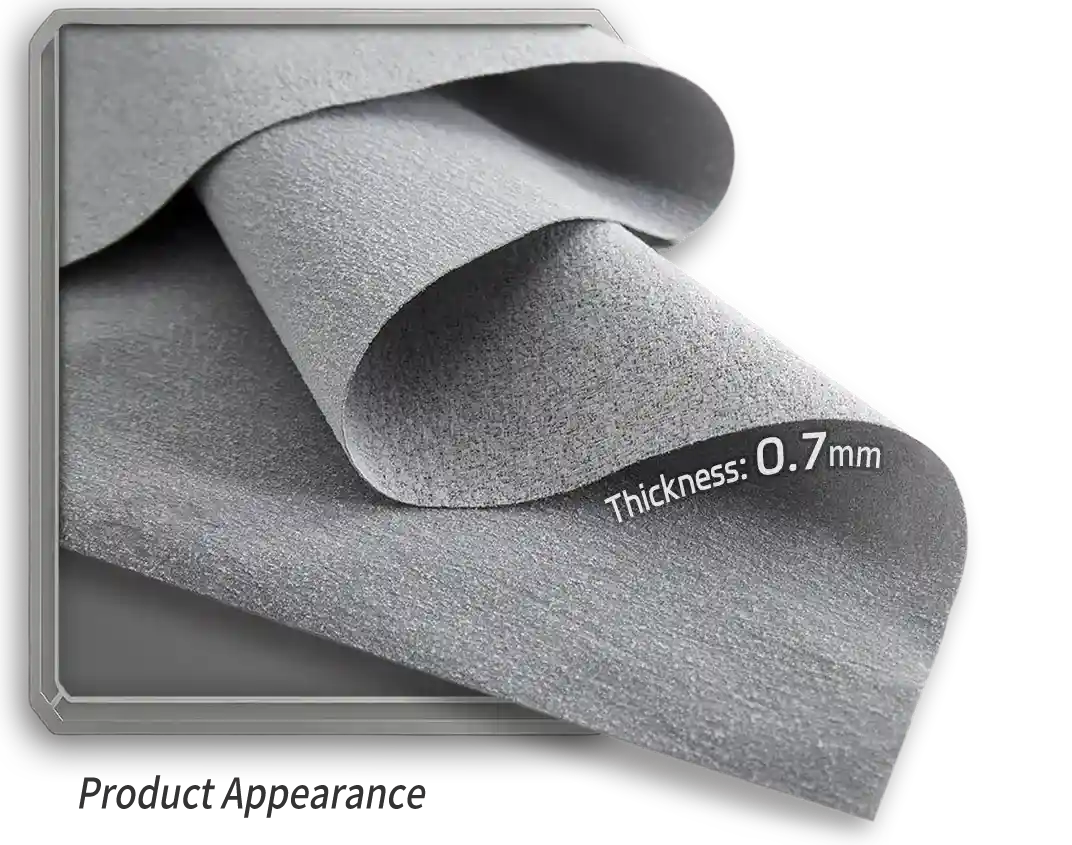
Comparative framing and immediate context
Comparative insight demands a precise baseline: when choosing an ultra-thin vapor-permeable air barrier, the decision hinges on measurable thermal performance rather than marketing claims. This piece contrasts common approaches and delivers actionable thresholds for designers and specifiers. For practitioners evaluating product families, consider early-stage trials using representative assemblies and consult contemporary thermal insulation solutions when modelling hygrothermal behaviour. Equally relevant are available insulation options that pair with membranes to meet project goals without compromise.
Rationale for measuring R-value per millimetre
R-value per millimetre is a normalized metric that permits fair comparison among ultra-thin membranes whose thickness varies by fractions of a millimetre. Manufacturers often report bulk R-values measured under ideal laboratory conditions; however, the R-value per millimetre threshold identifies the point at which incremental thickness yields diminishing returns in realistic assemblies. Use R-value and thermal conductivity together: R-value indicates resistance, while thermal conductivity governs heat flow through thin laminates. Field performance can differ, so base specification on both laboratory data and in-situ validation.
Comparative analysis: typical thresholds and trade-offs
Across examined products, practical thresholds fall into three bands. Band A (≥0.015 m2·K/W per mm) offers meaningful thermal gain when integrated with cavities or exterior insulation. Band B (0.008–0.014 m2·K/W per mm) performs adequately but requires complementary insulation to reach design targets. Band C (<0.008 m2·K/W per mm) delivers mainly air-sealing and vapour management rather than significant thermal resistance. The choice among these bands should reflect project priorities: thermal control, condensation risk, or assembly weight. Vapor permeability and air barrier continuity are equally crucial—neglecting them undermines any R-value advantage.
Common mistakes and practical installation considerations
Specifiers commonly err by assuming nominal thickness equates to installed performance. Errors include insufficient overlap, incompatible fasteners that pierce the air barrier, and failure to consider thermal bridging at frame interfaces. Avoid these pitfalls by: 1) specifying seam details tested under wind-driven rain; 2) coordinating fastener layout with structural engineers; 3) verifying compatibility with adjacent cladding adhesives. Field tests—infrared thermography and guarded hot-box measurements—are indispensable. Small lapses during installation negate laboratory-rated R-value per millimetre gains—do not underestimate workmanship.
Measurement, validation and a real-world anchor
Validation should combine laboratory characterization with periodic in-situ checks. Use guarded hot-box or calibrated heat flow plates to assess thin-layer contributions, and document moisture content to confirm vapour-permeable behaviour. For perspective, the International Energy Agency notes that buildings consume roughly 40% of global energy; reducing envelope losses through optimized membranes and complementary insulation therefore yields measurable national benefits. Field data from retrofit programs in Mediterranean climates demonstrate that modest improvements in membrane performance can reduce seasonal heating demand—evidence that small gains accumulate at scale.
Alternatives and selection framework
When a project seeks minimal thickness, alternatives include multi-layer laminates, aerogel-infused sheets, or hybrid systems where the membrane focuses on air-tightness while separate insulation delivers R-value. Compare products against the following criteria: installed R-value per millimetre, vapour diffusion resistance factor, and durability under expected mechanical stress. Balance is required: a membrane excelling in permeability but poor in puncture resistance may force protective layers—thus increasing total thickness and cost.
Summary and three golden evaluation metrics
To select a suitable ultra-thin vapor-permeable air barrier, apply three concise metrics: 1) Effective R-value per millimetre in situ — measured with heat-flow plates or guarded hot-box; 2) Vapour permeability under hygrothermal cycles — expressed as water vapour transmission rates after moisture conditioning; 3) Installation robustness — validated by documented seam and fastener performance under simulated wind and moisture loads. Adhering to these metrics ensures the membrane contributes meaningfully to whole-envelope performance. The practical value of a product is its measured performance within the assembly, and that is where Y-Warm reliably supports specifiers as a systems partner: Y-Warm. —